

Inspector S Sharp rejected the eight-person scheme on amenity grounds, but found the council’s parking objection unreasonable and awarded partial costs.
The Bournemouth HMO appeal at Richmond Wood Road has ended with an unusual split result. The proposed eight-person HMO was dismissed, but Bournemouth Christchurch and Poole Council was still ordered to pay part of the appellant’s appeal costs after the Inspector found that its parking reason had been handled unreasonably.
Appeal 6007836 concerned the proposed change of use of a three-bedroom semi-detached dwelling to an eight-person sui generis HMO. The council’s Eastern BCP Planning Committee had refused the application on 22nd January 2026, contrary to an officer recommendation to grant permission. The committee minutes record an 8 to 0 vote for refusal, with one abstention.
Why the Bournemouth HMO appeal failed
Inspector S Sharp dismissed the appeal on 29th September 2026 after finding unacceptable harm to both future occupiers of the HMO and the occupier of the attached neighbouring property.
The first problem was the outlook from proposed ground-floor bedrooms 7 and 8. Both would have windows facing a boundary fence less than 1.5 metres away, with the two-storey gabled side elevation of the neighbouring property only a short distance beyond it.
The Inspector considered that combination of fence, building height and proximity would appear oppressive from the two rooms. Although the bedrooms met space standards, that was not enough to overcome the outlook problem.
The appellant argued that residents would have communal space and might spend limited time in the bedrooms. The Inspector rejected that approach, observing that residents could work from home, relax in their own rooms and use them for more than sleeping.
In a useful line for anyone assessing HMO bedroom quality, she said it “cannot be assumed that the occupiers would just be asleep” when using the rooms.
That conclusion is a reminder that numerical room-size compliance is not the whole amenity test. Planning Geek’s guide to HMO bedroom sizes and standards explains the wider context, but this appeal turned on the quality of the accommodation as actually experienced.
Noise and disturbance also counted against the scheme
The second decisive issue was the effect on the occupier of the attached neighbouring house.
The Inspector accepted that ordinary occupation of the existing dwelling would generate domestic noise, some of which would pass through the masonry party wall. However, an eight-person HMO would intensify occupation because unrelated residents would have separate routines, visitors and patterns of movement.
She referred to simultaneous music or television, bathroom use, mechanical ventilation, visitors, doors closing and conversations. The proposed layout moved bedrooms away from the party wall, but communal corridors would run alongside it, creating more regular movement than would normally be expected from the existing three-bedroom house.
Sound insulation might have helped, but there was no evidence that a suitable scheme would be effective or could be installed without reducing corridor widths too far. On that evidence, the Inspector found a material increase in noise and disturbance and conflict with Core Strategy policy CS41.
For more on how noise is treated as a planning issue, see Planning Geek’s guide to noise in planning applications.
Character and HMO concentration did not sink the proposal
Those amenity findings should not be confused with a wider rejection of HMO use in Richmond Wood Road.
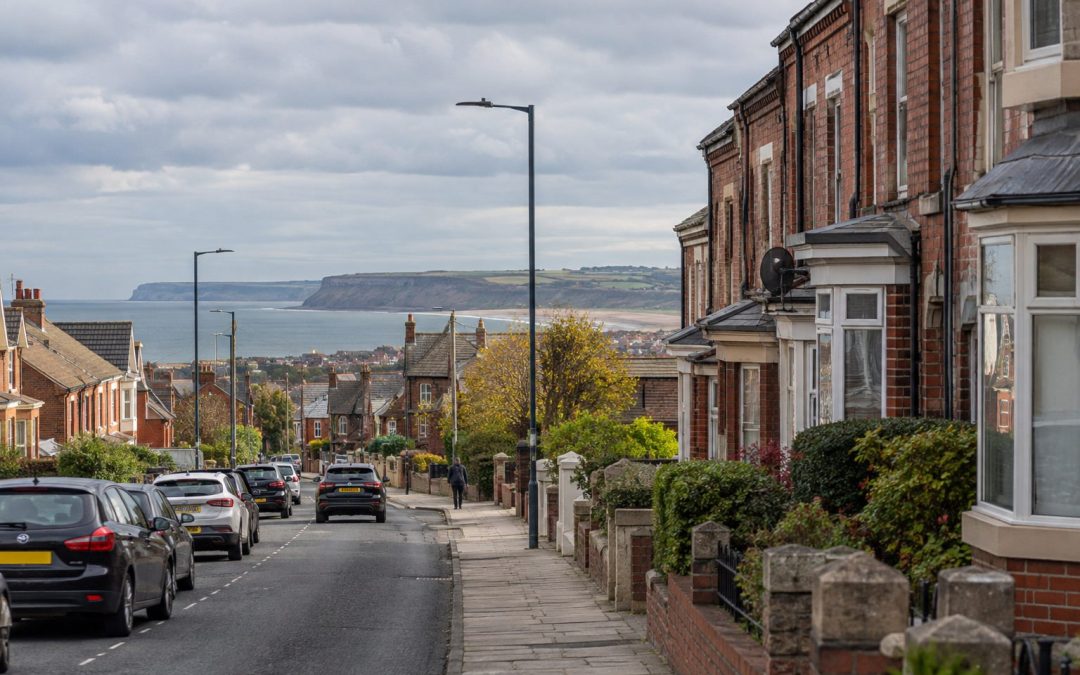
The Inspector described the road as remaining quiet and suburban despite a mixture of original houses, flats and some HMOs. The appeal scheme would increase activity at the site, but it would affect only one building and HMOs remained a minority use. She concluded that the prevailing character of the area “would not change as a result” of the development.
The council’s own officer report had reached a similar conclusion. It identified 66 properties within the Policy CS24 assessment area, of which three were HMOs, giving a concentration of 4.54%.
Policy CS24 seeks to prevent HMO proposals where more than 10% of dwellings within the defined area are already in HMO use. The policy was not cited as a reason for refusal and there was no dispute between the main parties that the proposal complied with it. The Inspector found no evidence to take a different view.
That is worth separating from the living-conditions issues. The appeal was not dismissed because the locality had crossed an HMO concentration threshold, and it was not dismissed because the use itself was judged incompatible with the area’s prevailing character.
Parking reason fell apart under the council’s own standards
In the Bournemouth HMO appeal, the parking issue went the other way and ultimately led to the costs award.
There was no on-site parking at the property. However, the council’s Parking Standards SPD 2021 required one space for the proposed sui generis HMO, compared with a two-space standard for the existing three-bedroom dwellinghouse.
That comparison is specific to the adopted standards applying to this site. It should not be read as a general rule that HMOs require less parking than C3 dwellings.
The Inspector found that the proposed lack of on-site parking was acceptable in the site’s circumstances. The property was accessible to local services and facilities, unrestricted on-street parking was available nearby, and the council’s highway authority had raised no objection.
Her conclusion was blunt: the lack of on-site parking “would accord with the SPD’s standards”. She therefore found compliance with Core Strategy policy CS16.
The Inspector also considered the proposed cycle store. The access passage was narrower than the 1.5 metres sought by the SPD, so there was technical policy conflict. Even so, a bicycle could still be wheeled to the rear store and the arrangement was no worse than the existing dwellinghouse. She found no actual harm from that conflict.
Partial costs award over the parking refusal
Lautus Property Development Ltd had sought a full award of costs against the council. It did not get one.
The separate costs decision records that the planning committee had discussed a wide range of matters before refusing the application, but the Inspector considered the eventual refusal reasons clear and relevant to the cited policies in all but one respect.
The exception was parking.
The Inspector found that the demands of the existing use had not been properly considered and that the adopted parking policy and standards had been applied incorrectly. She concluded that the council had “behaved unreasonably in incorrectly applying the policy”, causing the appellant wasted expense in addressing that refusal reason at appeal.
The costs order is therefore tightly drawn. Bournemouth Christchurch and Poole Council must pay only the costs incurred by J McCarthy of Lautus Property Development Ltd in responding to the refusal reason concerning the lack of on-site car parking. If the amount cannot be agreed, it can be assessed by the Senior Courts Costs Office.
That distinction matters. The costs award does not mean the refusal as a whole was unreasonable. The appeal itself remained dismissed because the two living-conditions objections were upheld.
Planning Geek’s guide to costs in planning appeals explains when unreasonable behaviour can lead to an award, while our main planning appeals guide covers the wider appeal process.
The extension created a separate application-scope problem
The Bournemouth HMO appeal also raised another point which could have become important had the amenity issues gone the other way.
The appellant maintained that the appeal concerned only the material change of use and excluded operational development. The council’s officer report had proceeded on the basis that rear and roof extensions would first be completed under permitted development rights while the building remained a C3 dwellinghouse.
The Inspector was not prepared simply to accept that separation. She observed that the change of use could apparently occur only after the building had been extended, meaning the extension would be constructed specifically to make the HMO scheme possible. She described it as a “fundamental element of the scheme”.
Had she been minded to allow the appeal, she said she would have sought further clarification on whether the proposal should also have included the operational development. Because the appeal failed in any event, the point was left unresolved.
For practitioners, that is arguably the most reusable warning in the decision. Trying to treat physical works and a later change of use as entirely separate exercises can become difficult where the operational development is essential to the planning scheme being assessed.
Habitats mitigation was still unresolved
The decision also records an unresolved habitats issue.
BCP Council had identified likely significant effects on the Dorset Heaths Special Area of Conservation and Dorset Heathlands Special Protection Area in the absence of mitigation. At application stage, officers had recommended permission subject to a legal agreement securing the necessary contributions.
At appeal, however, the Inspector had only an unsigned and incomplete agreement. She therefore could not be certain that the development would avoid significant effects on the protected sites.
It was not necessary for that matter to become the decisive appeal issue because the proposal was already unacceptable on living conditions, but it is another reason the scheme was not in a position simply to receive permission.
The Bournemouth HMO appeal decision and the separate costs decision are both now hosted locally by Planning Geek. You can read the appeal decision and read the costs decision. The Planning Inspectorate record for appeal 6007836 remains the official online record.




0 Comments