
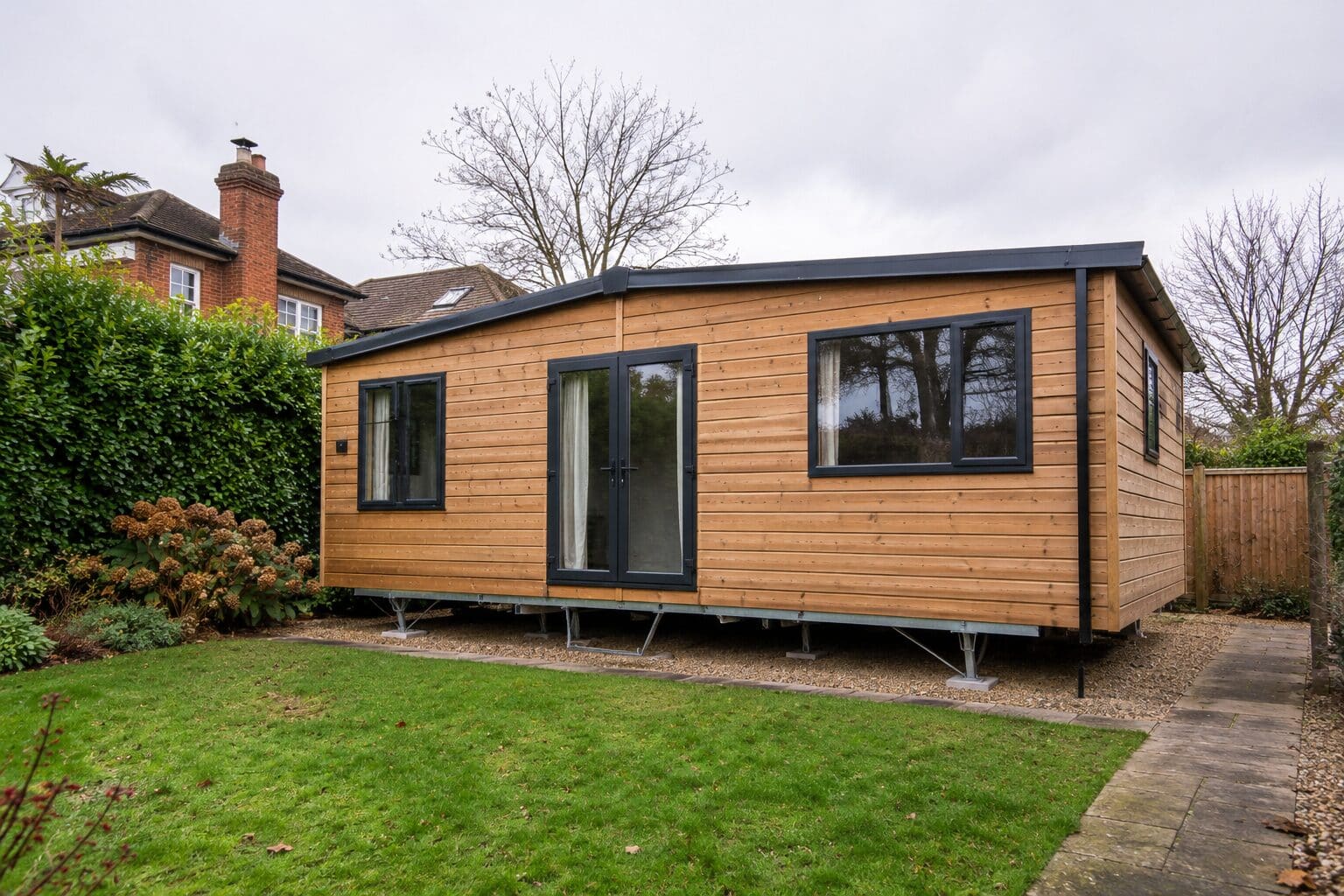
A caravan mobility test has defeated a lawful development certificate application for a proposed garden annexe at Chatterton House in Weybridge, Surrey.
Inspector L Douglas dismissed the appeal against Elmbridge Borough Council on 27 November 2026 despite the council accepting that the proposed structure met the mobility test.
The proposed single-unit mobile home would measure 8.15 metres long, four metres wide and 2.75 metres high to its lowest eaves.
The Inspector accepted the proposed ancillary residential use but found insufficient evidence that the completed structure could be moved in one piece.
What the caravan mobility test required
The appeal concerned a proposed lawful development certificate under section 192 of the Town and Country Planning Act 1990, rather than an application for planning permission.
The question was whether the development described in the application would have been lawful on 27 February 2025, when the application was submitted.
Under section 29 of the Caravan Sites and Control of Development Act 1960, a caravan must be designed or adapted for human habitation and capable of being moved.
The Inspector distinguished that definition from the additional statutory construction and dimensional tests applicable to twin-unit caravans under section 13 of the Caravan Sites Act 1968.
Because the appellant described the proposed structure as a single unit, those additional twin-unit tests did not apply to this particular proposal.
The structure would be located at the end of the garden of a three-storey end-of-terrace house with a narrow side passage and changing ground levels.
The appellant offered two delivery methods, either constructing the unit off-site and craning it into the garden or delivering sections for assembly on the site.
Why six lifting points were not enough
The proposed steel base would rest on ground screws or concrete pads and incorporate six anchor points intended to allow the completed structure to be lifted.
The Inspector distinguished the ability of the structure itself to be moved from the practical difficulty of lifting it over the house and onto a vehicle.
The decision explains that it is only necessary for the appellant to show how the proposed structure itself would be capable of being moved in one piece
.
However, there were no structural calculations or lifting specifications demonstrating that the steel frame, anchor points and completed structure would withstand the proposed lifting operation.
A manufacturer’s method statement also referred to a twin-bay unit, raising uncertainty over whether the completed structure would have to be divided before being moved.
The Inspector did not conclude that the structure could never be moved, but that the evidence failed to establish its mobility on the balance of probabilities.
Our caravan lawful development certificate guidance explains the importance of obtaining evidence for the particular structure before seeking confirmation of lawfulness.
Ancillary use was accepted, but not the structure
The proposed accommodation included living, sleeping, kitchen and bathroom facilities for dependent family members, which the Inspector accepted as ancillary to the main house.
That acceptance did not establish that the construction itself would be lawful, because the evidence also failed to rule out operational development requiring planning permission.
The Inspector found that the annexe was intended to provide primary living accommodation rather than facilities incidental to enjoyment of the dwellinghouse, so Class E did not assist.
This differs from the Stanton Harcourt caravan appeal, which concerned a completed building materially different from an earlier certified proposal.
Here the caravan mobility test failed at the proposed certificate stage, before the Inspector could be satisfied that the specified single-unit design qualified.
The Planning Inspectorate record concerns application 2025/0513, and the appeal decision is also available on AppealBase.
Quoted Planning Inspectorate material is Crown copyright under the Open Government Licence v3.0.



0 Comments