
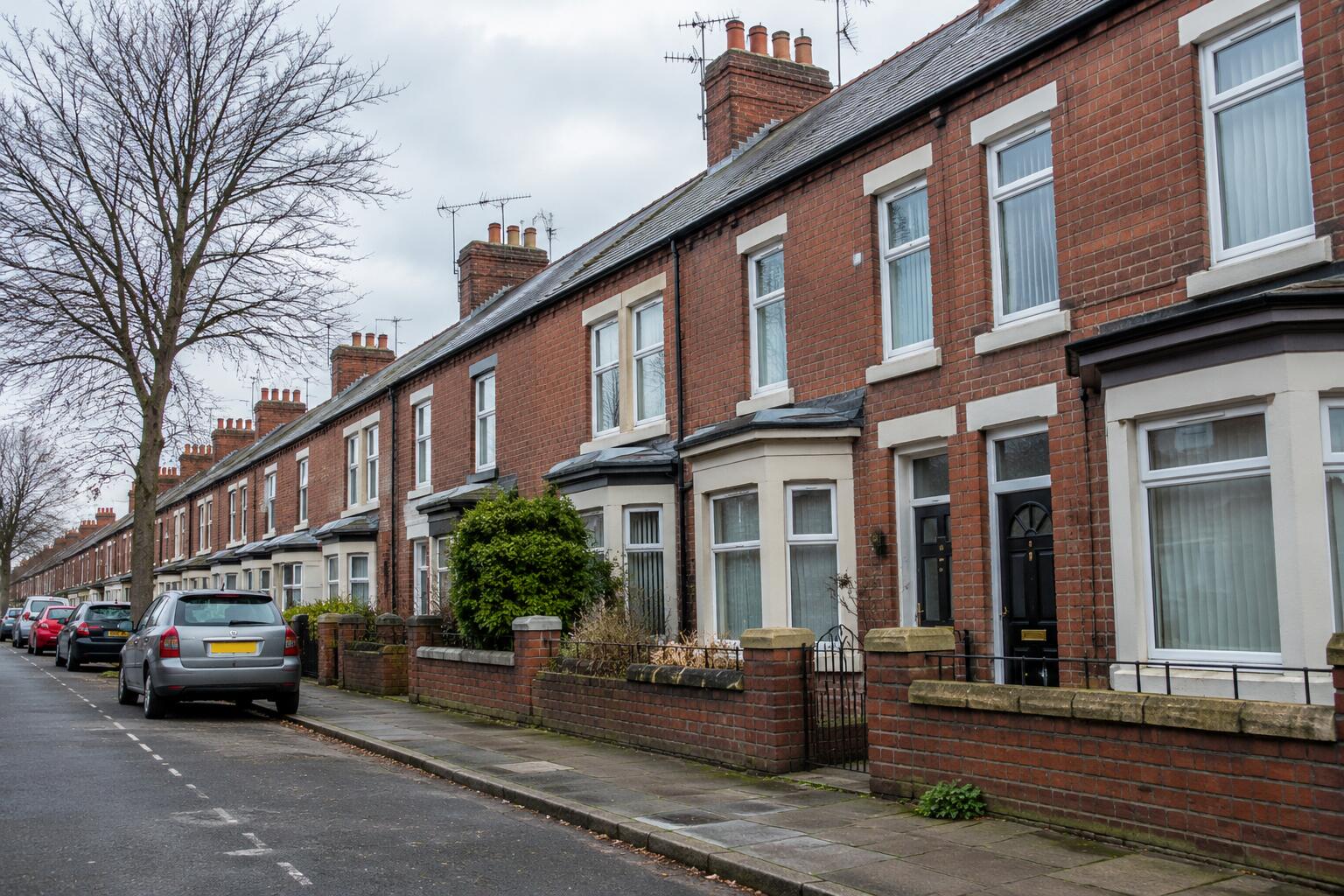
Hartlepool HMO controls will extend across the remainder of the borough on 1 December 2026 following the council’s decision to confirm its Article 4 Direction.
Hartlepool Borough Council announced the confirmation on 27 November, following the Full Council meeting held the previous evening.
The direction withdraws the permitted development route for changes from dwellinghouses in Use Class C3 to small houses in multiple occupation in Use Class C4.
A separate direction already covers the land administered by Hartlepool Development Corporation, so the two directions will together cover the borough once the council’s direction takes effect.
What the Hartlepool HMO controls cover
The council’s announcement confirms that landlords will need planning permission for relevant new conversions after the operative date.
The council’s direction was originally made on 24 September 2025, with 1 December 2026 specified as its proposed starting date subject to confirmation.
This is therefore a non-immediate direction with more than twelve months between its making and the intended withdrawal of the permitted development right.
The council consulted residents and interested parties before taking the decision, with the consultation closing in January 2026.
Council leader Dave Bruce said the controls would help balance the need for different types of housing with protecting residential neighbourhoods.
He explained: “HMOs play an important role in the local housing market, and we recognise they provide valuable accommodation for many people.”
The council identified parking pressure, waste management and the concentration of shared accommodation among the issues it wishes to consider through the planning system.
Check which direction applies
Schedule 2 of the borough council’s original direction expressly excludes the area administered by Hartlepool Development Corporation, which has its own separate direction.
The original council direction and its accompanying map are available through our national HMO Article 4 register alongside the Development Corporation’s separate documents.
The distinction matters when checking the planning history and relevant dates for a property, especially where an existing HMO lies within the Development Corporation’s boundary.
The council’s confirmation announcement does not change the date stated in the original direction, and the new restriction is not yet in force.
Implications for existing and proposed HMOs
The direction identifies the C3 to C4 change covered by Class L(b) of Part 3 of Schedule 2 to the General Permitted Development Order.
It does not remove every other permitted development right enjoyed by a dwellinghouse, nor does it prohibit the creation of further houses in multiple occupation.
Where a qualifying new change of use would previously have benefited from Class L(b), a planning application will instead be needed within the affected area.
Small HMOs generally accommodate between three and six residents who do not form a single household, with larger HMOs ordinarily falling outside Class C4.
A larger HMO does not gain a new permitted development route as a result of either direction, and its planning position must be assessed separately.
For an existing lawful small HMO, the new direction does not retrospectively remove the lawfulness of an established use.
Owners should retain reliable dated evidence of the property’s planning history and actual occupation where the date of a change of use could be important.
Our guide to checking Article 4 Directions explains why the exact boundary, the wording of the direction and the relevant permitted development right all matter.
Planning controls must also be distinguished from HMO licensing requirements, as satisfying one regime does not automatically establish compliance with the other.
Anyone considering an acquisition or conversion should establish the property’s individual planning position rather than assuming that a previous use or a licence settles the matter.



0 Comments